The Ponderosa Ranch
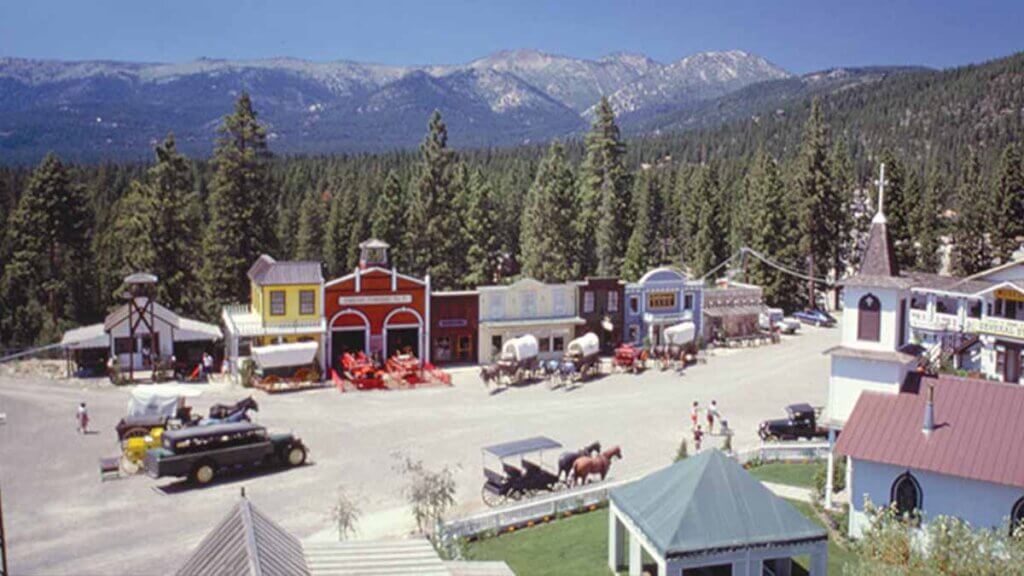


Once a cultural landmark in northern Nevada, the Ponderosa Ranch has been closed for two decades. But the park’s legacy remains strong, found in preserved fragments spread across the state and in the memory of those lucky enough to grow up with it.
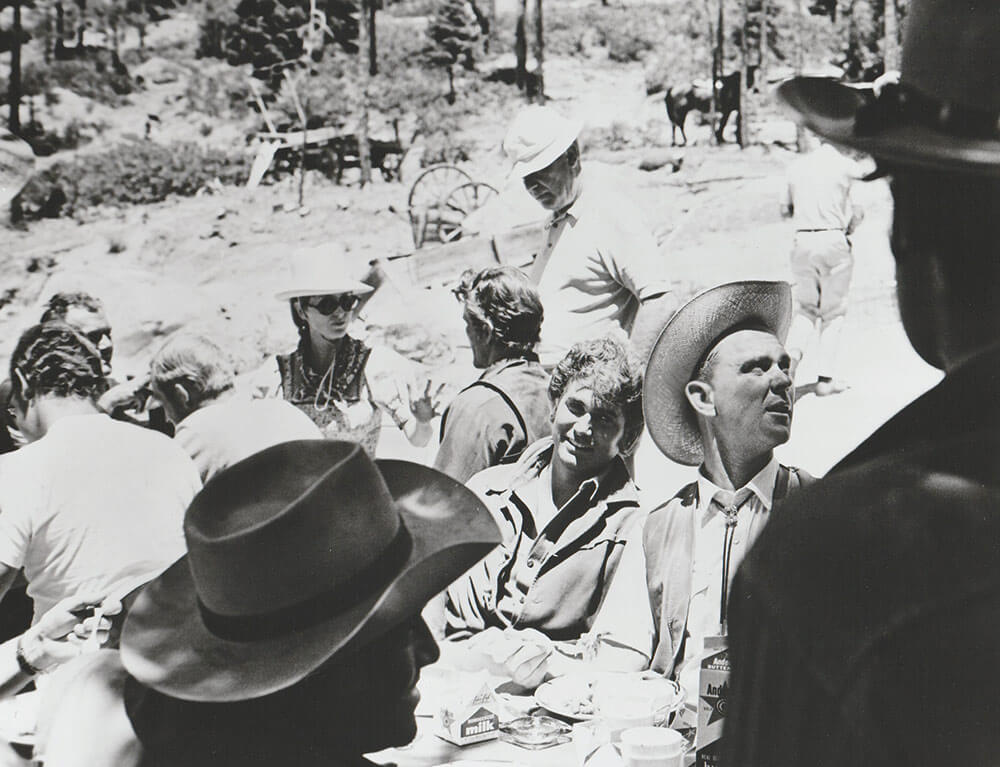
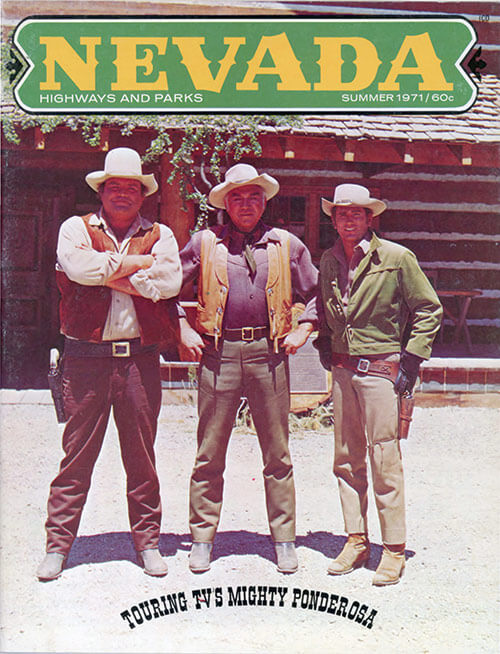
“Nevada Highways and Parks” (earlier name of Nevada Magazine) Summer 1971 cover, showing the main cast from “Bonanza.”
The “Real” Ponderosa
In 1959, NBC brought the Western series “Bonanza” to American homes. To sell more color televisions for its parent company—RCA Corporation (then an electronics powerhouse)—NBC crews shot B-roll of Lake Tahoe’s deep, blue water framed by lush green pines.
The show’s title card began with a map of the fictional Ponderosa Ranch, depicted stretching from the shores of Tahoe to Carson City. The map then combusted, revealing the horse-riding Cartwright family: Ben (Lorne Greene), Adam (Pernell Roberts), Hoss (Dan Blocker), and Little Joe (Michael Landon).
The show’s 431 episodes focused on the lives of the Cartwright boys, bringing viewers on weekly adventures full of danger, romance, and humor while confronting social issues through the lens of the Western frontier.
It might be hard for younger readers to appreciate the reach and impact of “Bonanza.” During the mid 1960s, it was the most popular show on television. For two seasons (1964 and 1965), the show averaged more than 19 million viewers an episode and was syndicated in 49 countries.
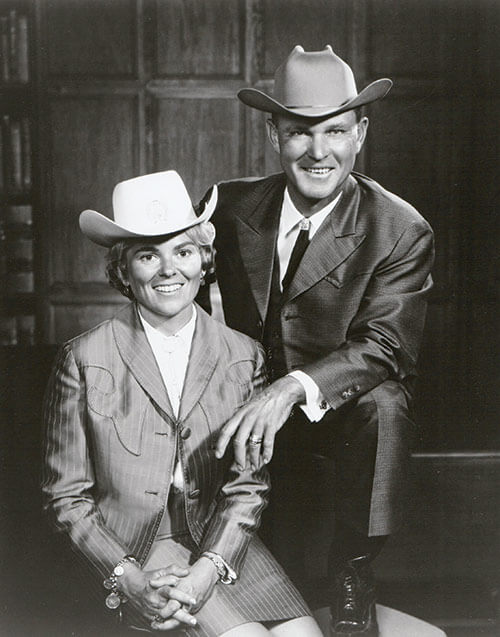
Ponderosa Ranch founders Joyce and Bill Anderson courtesy of The Thunderbird Lodge Preservation Society
Carving An Opportunity Out Of The Woods
Back in Nevada, Bill Anderson was a self-starter who arrived in Lake Tahoe with his wife Joyce in 1962. His daunting job was to clear the pine trees and granite boulders on Tahoe’s undeveloped North Shore to create infrastructure for the new town of Incline Village. Due to a loophole in his contract, Bill Anderson controlled more than 400 acres of land near town.
As the show’s opening map put Incline Village within the boundaries of the fictitious Cartwright ranch, visitors frequently stopped by Anderson’s property looking for the “real” homestead. Of course, the ranch didn’t exist, but this seemed like a perfect business opportunity. The Andersons began developing an idea that combined the success of the hit TV show with the beauty of North America’s largest alpine lake.
The first step came after Anderson discovered NBC was paying for horses to be hauled from Los Angeles to Lake Tahoe. He convinced the network to save on transport by keeping the horses on his land. Anderson used the horses to offer pony-cart rides for children.

The Ranch Outlives The Show
In 1972, Dan Blocker died unexpectedly from complications following surgery. The show added Griff King, played by 25-year-old Tim Matheson, to appeal to a younger audience, but fans felt the loss of Hoss too deeply. The show ended its run in 1973.
With “Bonanza’s” cancellation, the Ponderosa Ranch had seemingly lost its reason to exist. However, the property would continue operating and entertaining guests for the next 30 years.
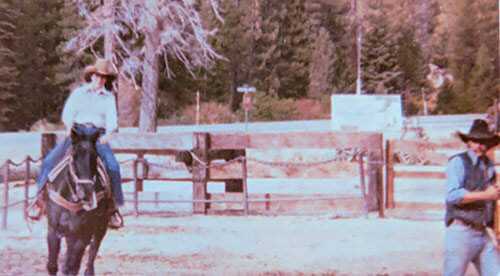
©Joanne Paolillo
Many nostalgia-seekers came to immerse themselves in the heyday of the American Western, but the Ponderosa Ranch was also simply a fun place to spend time. Visitors rode horses, enjoyed “hayride breakfasts,” walked through a disorienting mystery mine, toured the Cartwright ranch house, and ate “Hoss-burgers.” Decades after the show ended and the cast stopped making appearances, crowds continued to make the Ponderosa one of the biggest seasonal employers for locals (including my mom, Connie Maynard, who worked for Joyce Anderson).
The ranch was also an attractive workplace for out-of-towners. Avid horsewoman Joanne Paolillo (née Travers) came to Lake Tahoe from the East Coast in summer 1978. A few weeks after arriving, she saw a pamphlet for the Ponderosa Ranch.
“I couldn’t believe the Ponderosa Ranch of my childhood was so close by!”
Joanne Paolillo
She decided to take a trail ride but was soon offered a job to finish out the season. The next spring, Paolillo became the first female live-in wrangler at the ranch. Her job included saddling horses, serving pancake breakfasts, guiding dozens of horseback guests, and cooking for the wrangler crew. If there was a dinner ride, the day ended between 10 and 11 p.m.
“It was a different time back then,” says Paolillo, “and I broke many barriers to gain the respect of the rest of the crew.”
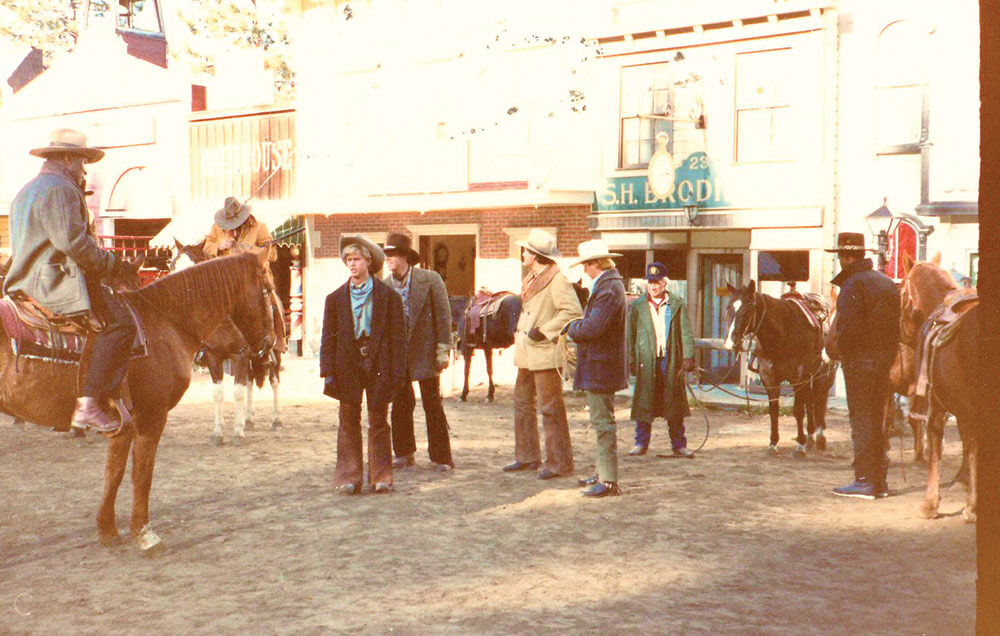
Cameras Roll Again On The Ponderosa Ranch
In 1987, my mom came home from work with an exciting opportunity. Joyce Anderson had secured us roles as extras in a TV pilot for a “Bonanza” sequel called “Bonanza: The Next Generation.” Along with many other locals, we were fitted with period costumes and tasked to stroll in the background of scenes set in “Virginia City”—really just the theme park’s Old West façade.
Excitingly, Lorne Greene was slated to return as Ben, but he died before production began. The other original cast members were not available: Michael Landon was busy filming “Highway to Heaven,” and Pernell Roberts’s character had been written out of the series decades before. Despite this setback, filming continued, appropriately starring Michael Landon Jr. and Gillian Greene to play the titular next generation of Cartwrights.
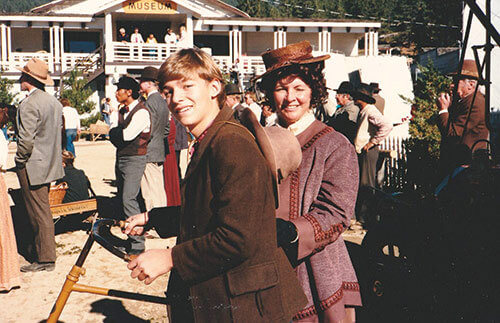
Mark and Connie Maynard ©Mark Maynard
After the film crews departed, the Ponderosa Ranch passed to the next generation. In 1996, Bill and Joyce Anderson’s children took over the day-to-day operations. Wanting to leave the legacy of the Ponderosa for Nevada residents, a years-long plan was initiated with the U.S. Forest Service and other entities to acquire the land.
The series wasn’t picked up, but there were two made-for-TV movies, both of which were filmed at the ranch: “Bonanza: The Return” in 1993 and “Bonanza: Under Attack” in 1995, which featured Tahoe homeowner Leonard Nimoy of “Star Trek” fame.
The purchase was never approved by Congress. In 2004, billionaire software magnate David Duffield bought the property for an estimated $55 million, and the park closed on Sept. 26, 2004. The Ponderosa Ranch era was over after 37 years.
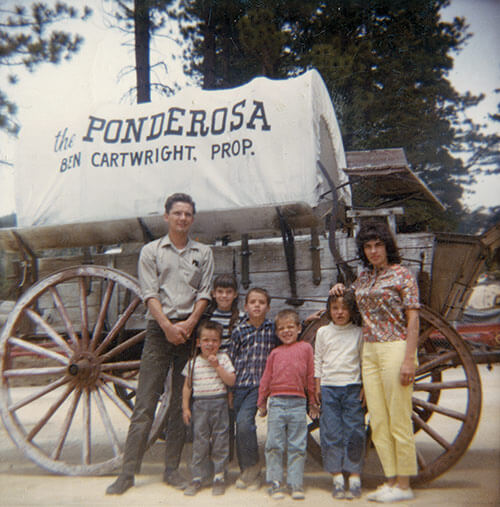
Executive Editor Megg Mueller’s family in 1966
Packing Up The Ponderosa
After the sale, most of the original structures—including the ranch house—remained on property for years until the liability of maintaining and insuring them became too much for the new owners.
The ranch is gone, but some of its best artifacts are being taken care of by the Thunderbird Lodge Preservation Society, a nonprofit organization dedicated to gathering, restoring, and distributing important Nevada artifacts. The society’s curator, Bill Watson, calls the collection Lake Tahoe’s attic.
“A lot of these buildings were sets,” says Watson. “They weren’t made to be functional, long-
standing buildings.”
The Duffields recognized the cultural value of the television history, rare vehicles, and historic mining equipment. They were the ones who reached out to the society to begin the process of archiving the property.
Some of these artifacts are now in the Nevada State Museum and the Nevada Railroad Museum in Carson City, and the California State Museum. And a couple of the most iconic buildings have been saved to be rebuilt on the other side of Nevada at Red’s Ranch in Lamoille.
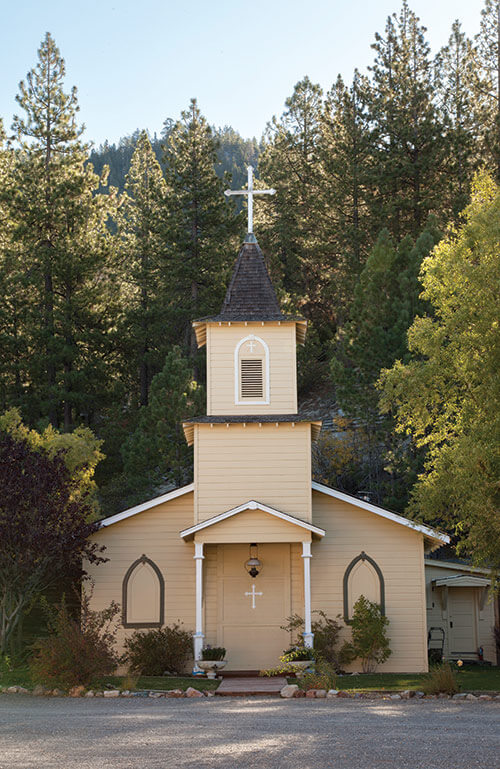
Ponderosa Ranch church ©Sally Hanrahan
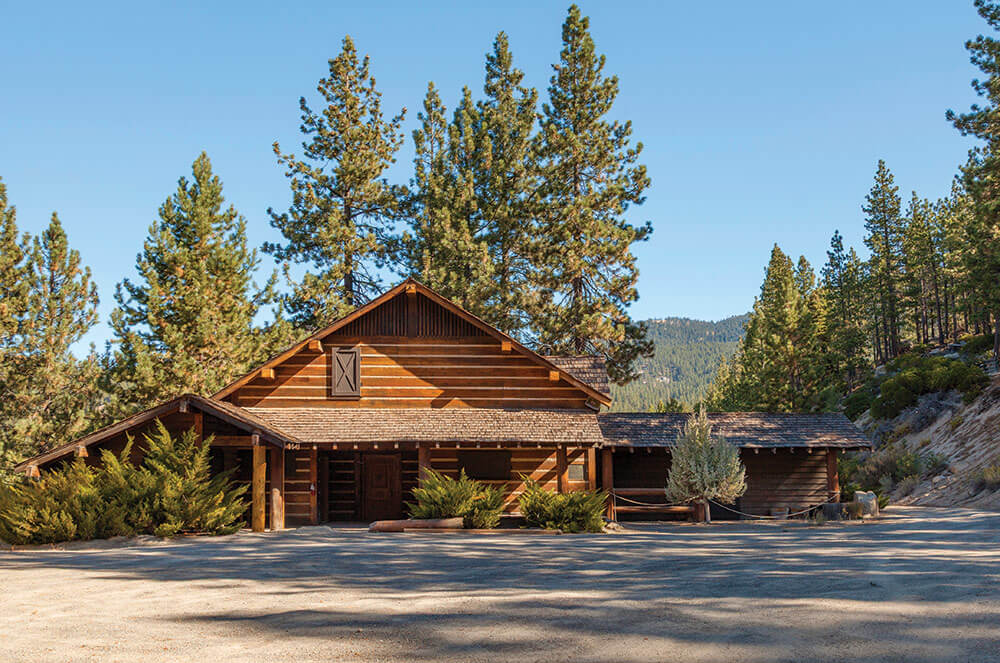
Foundation 36, a sister organization of the Thunderbird Lodge Preservation Society, is caretaking many of the Ponderosa Ranch buildings for eventual restoration near Elko. The property’s church was originally built in Janesville, California, in 1871. It was disassembled and hauled to Incline Village by Anderson in the 1960s, where it hosted up to 15 weddings a week. After the Ponderosa closed, the church was again disassembled, hauled out to Lamoille, and restored by Foundation 36 volunteers.
“That little church has traveled,” says Watson, “but the interior is pretty much as it was back in the day.”
The Cartwright ranch house was saved as well.
“It’s in containers. That’s our next fundraising project.”
Bill Watson
The Cartwright Legacy Lives On
Whatever becomes of the Ponderosa Ranch’s rich legacy, its memories will live on in the memories of its Incline Village neighbors, its visitors, and those around the world who still watch the show in reruns.
“I still run into folks who have such wonderful memories of going to the ranch,” says Paolillo. “It was a place for all ages, from all walks of life, many from overseas, to enjoy and relive their memories of the show.”