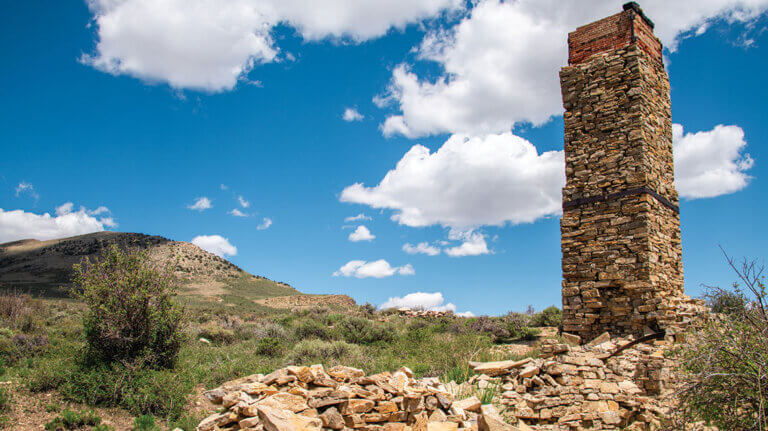
The Opal of My Eye

Adventures that are one-of-a-kind are highly sought after. Social media is awash in images of people purporting to experience something that is entirely unique. I wish I could say mining for black fire opals in Nevada’s Virgin Valley is one of those experiences, but no: You can in fact do it elsewhere. But, if traveling to New South Wales, Australia—the only other place on the planet these gems exist—seems a bit far to travel, then look no further than Nevada’s remote northwestern corner for the dig of your dreams.
Can You Dig It?
It’s been 10 years since I last searched for opals, but the allure of the black fire opal has called to me once again. This time, I’m hitting the road with my work mates, Alexandria and Abby. As we pull into the Royal Peacock Opal Mines—located 40 miles west of Denio near the Oregon border—the excitement comes flooding back.
Nevada’s mining history is full of tales of miners striking it rich among the dirt and rocks, and while I’m just digging for a day, who says it won’t be me?
“You never know, but if you’re looking for a sure thing, you might want to buy from the gift shop,” Jake Anderson, co-owner of Royal Peacock, says with a laugh. “Nevada is a gamble, after all.”
Last time I was at the mine, Jake was working with his mom, Julie Wilson, who ran the operation after the passing of her father (who had inherited the business from his father). This makes Jake the fourth-generation family member to run Royal Peacock, which he does now with his wife, Cassie. Suffice to say, Jake grew up finding opals, and if there was ever someone you want on your side showing you the ropes, it’s him.
While his family started out as ranchers, it was his great-grandmother who had an eye for the “pretties” found in the Royal Peacock mine across the valley from their land and insisted they purchase it in 1944. Today, those pretties are the backbone of the family business.
With the help of Harry and Joy Wilson (Jake Anderson’s grandparents), Nevada declared the black fire opal its official state precious gemstone in 1987.
A Rainbow of Delights
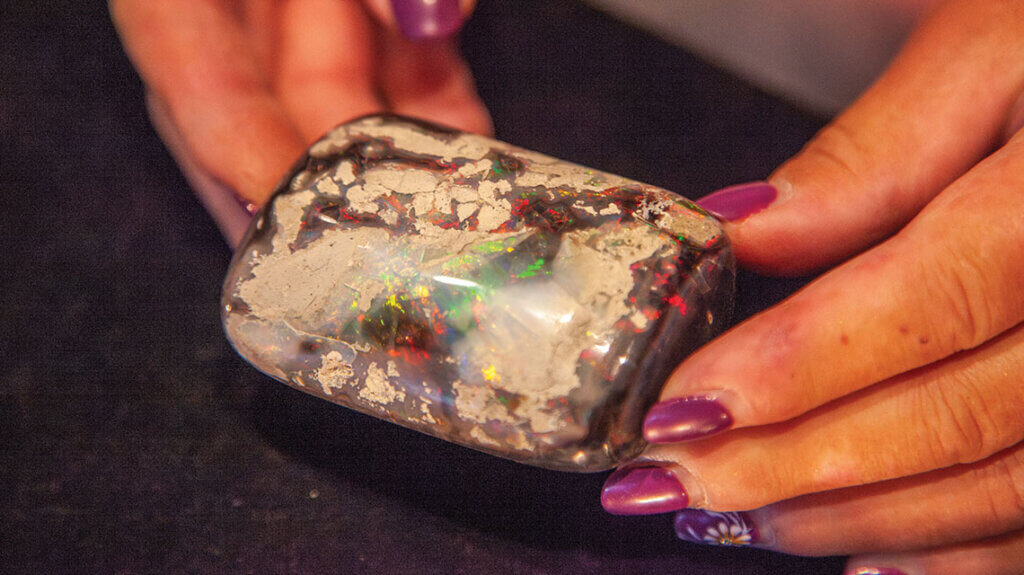
Produced nearly 14 million years ago when volcanic activity occurred in the region, opals come in a variety of colors, including pink, white, moss, lemon, and the all-in-one state gemstone, the black fire opal. No matter the color, finding opals among a sea of dirt is no mean feat, but when you do, it’s a rush unlike any other. The stones are fragile, and often the first indicator you’ve found one is when your pick sounds as if it’s hit glass.
After the initial cringe moment of worrying you’ve broken an amazing specimen (of which there were many), it’s time to lay down the heavier tools and start in with an awl or screwdriver, carefully trying to find the edges of the piece amid the bank of dirt. Often, I’d call Jake over for advice: How far around should I dig? Is this actually an opal? And how much could I hope to extract before it rapidly dried and began to crack and crumble?

Two Ways to Dig
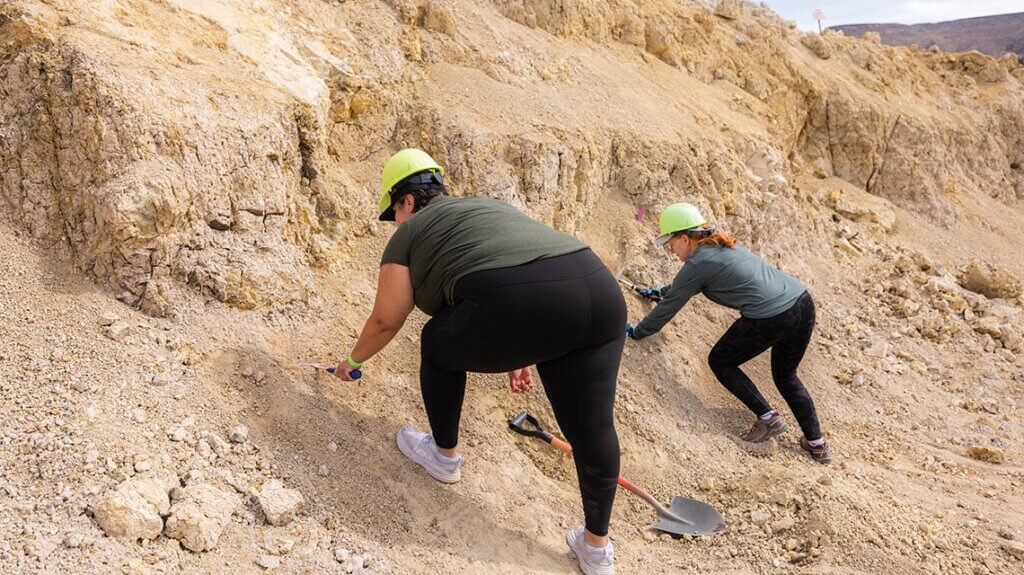
Searching for opals can be done a couple of ways, depending on your preference. There’s bank digging, where you work on a prepared bank with a pick and rock hammer digging for buried treasure. The other option is to rake the tailing piles, a gentler, less-expensive option that can prove just as fruitful (and, I have to say, looked less strenuous).
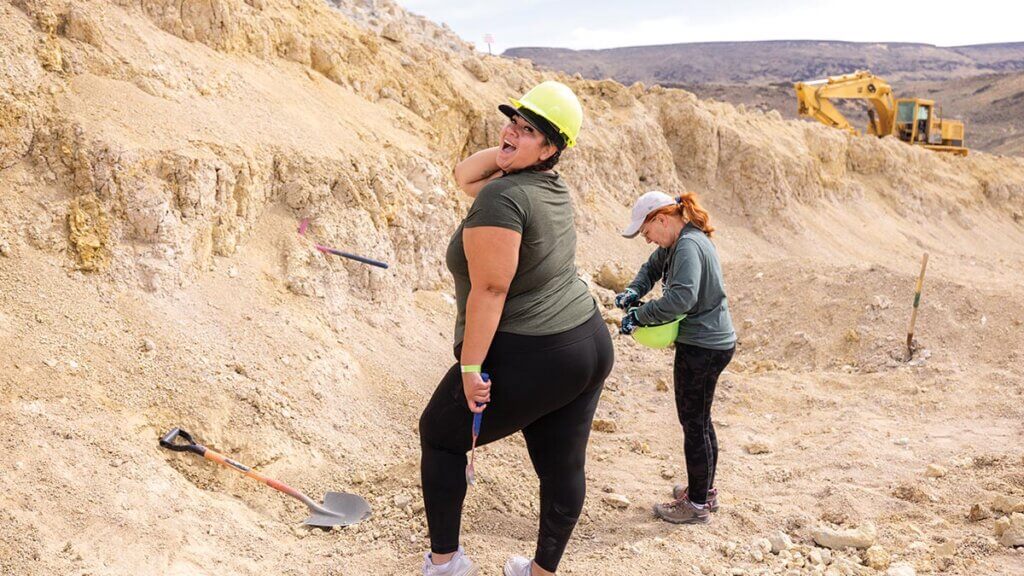
Alexandria, Abby, and I chose bank digging for our adventure. Armed with hard hats, pickaxes, and a whole lot of help, we spent hours looking for veins, fossilized wood, and the toothpaste-white signs of silica deposits, using all the tips Jake doled out.
Around us, other diggers were working the tailing piles. Combing through the earth left from previous diggers along with fresh material moved while preparing the banks, the tailings are often rich in overlooked limbs (log-shaped deposits that often encase the opals). Kids under 12 can’t dig the banks due to hazards from falling rock, but raking the tailings with their young eagle eyes is the perfect job for them, and they are free with paid adults.
Even More Ways to Play
Whichever way you choose, I heartily recommend staying the night at either the campground, RV park, or one of two furnished cabins. While one day of opal mining left us all exhausted with some muscle aches, we were dying to do it again the next day. Once you find one specimen, the game is on, and you can’t stop looking. But according to Cassie, while opal mining is the main draw, Royal Peacock attracts visitors of all stripes.
“You don’t have to mine to stay here,” she notes. “We do have lots of avid collectors who come for weeks at a time, but we also have stargazers, birders, ATVers, and hunters, plus lots of families.”
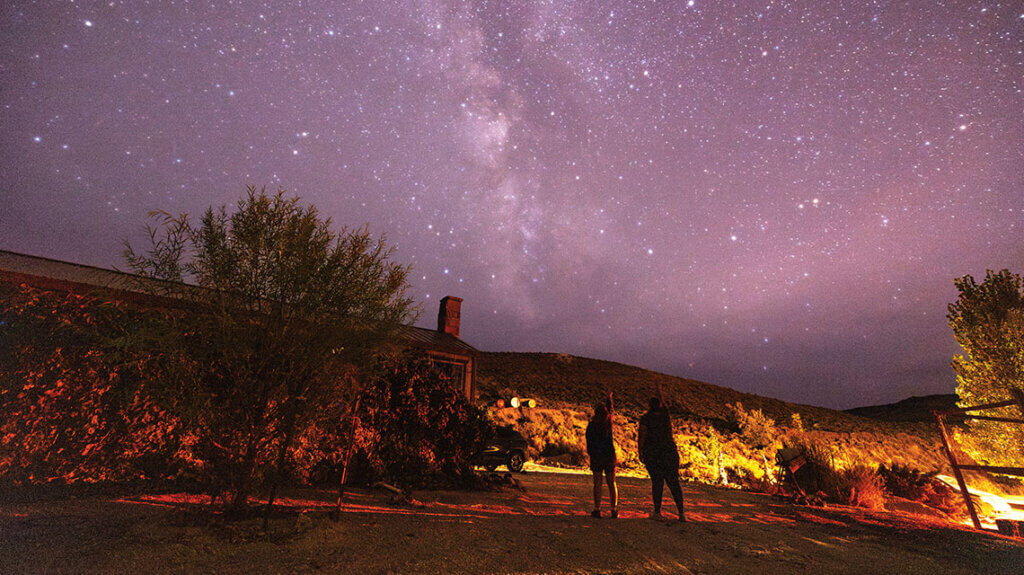
The remote location put on quite the star show during our visit, and Abby, who had never seen the Milky Way before, was overwhelmed by the night sky. Cassie said that’s not unusual, and it’s just one of the best parts of running Royal Peacock.
Travel Nevada Pro Tip
Before you go, make sure to review the list of items to bring for a successful dig. Along with your own tools—and don’t forget awls and skinny screwdrivers—gloves, zip-top bags, squirt bottles, paper towels, buckets, and soft brushes can make the job so much easier. Also pack sunscreen, plenty of water, and snacks! You’ll be digging in full sun without shade.