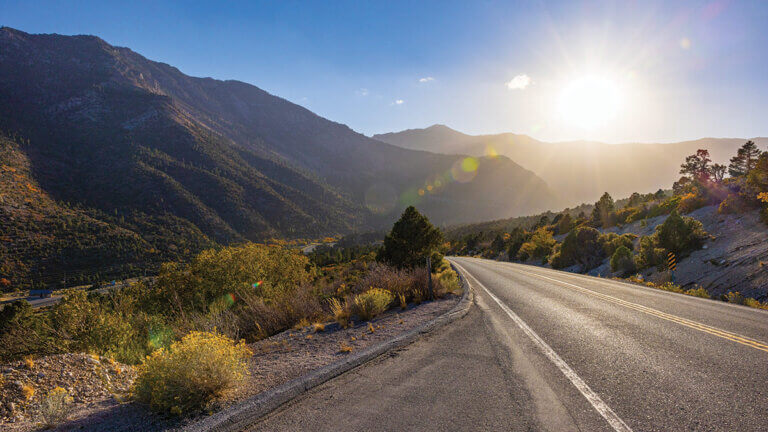
The journey to Hamilton starts right off U.S. Highway 50—about 45 miles east of Ely. To reach the ghost town, take the winding dirt road through the White Pine Range—accessible by most higher clearance vehicles—through classic eastern Nevada scenery with creeks, grassy meadows, pinyon-juniper-forested hillsides, and plenty of wildlife.
This idyllic, wind-swept setting is about as Nevada as it gets.
Still Standing
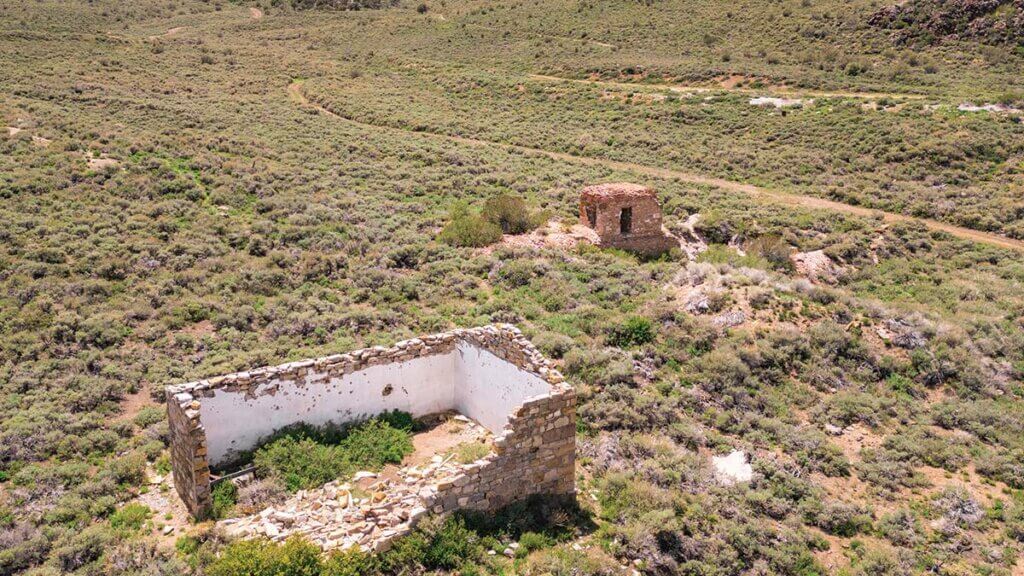
From the highway, the 11-mile drive takes about half an hour—though the scenic overlooks along the way might slow you down. Minutes before you arrive, you’ll spot the weathered shacks and crumbling brick structures sprawled below photogenic Mt. Hamilton. This idyllic, wind-swept setting is about as Nevada as it gets.
Of course, Hamilton has changed quite a bit since its founding in the late 1800s.
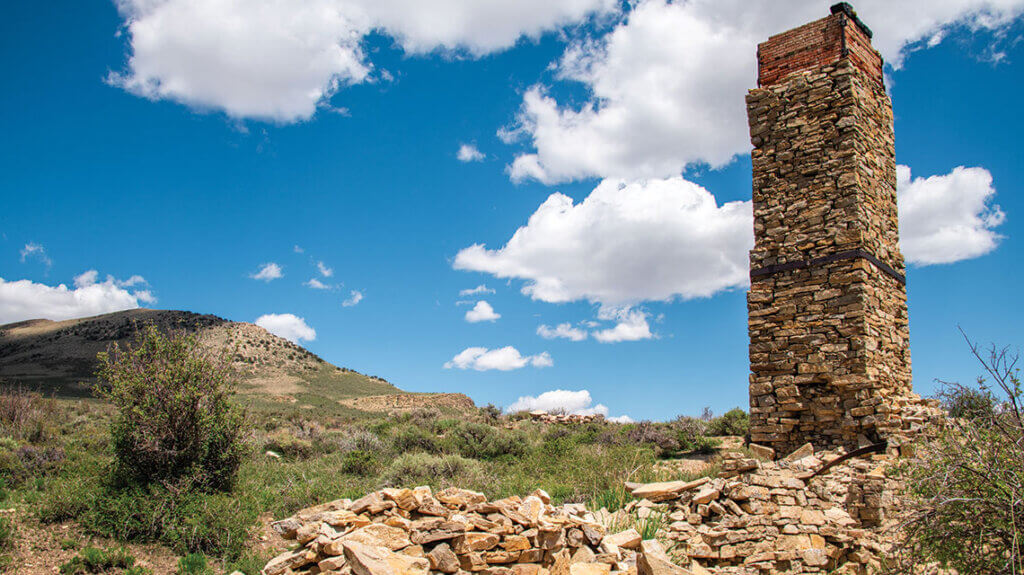
It’s also different from even a few generations ago. Ely residents who grew up in the 1950s will remember driving up to the mountain ghost town to tour its impressive brick buildings or walk through houses still stocked with furniture, canned food, and magazines. But, as is the fate of many ghost towns, this once-bustling metropolis was slowly disassembled, its bones repurposed for building materials and mementos.
Travel Nevada Pro Tip
After exploring Hamilton, head back to Ely for a delicious Basque chorizo sandwich at Racks Bar & Grill and a comfortable night at the famous Hotel Nevada, once the tallest building in the state.
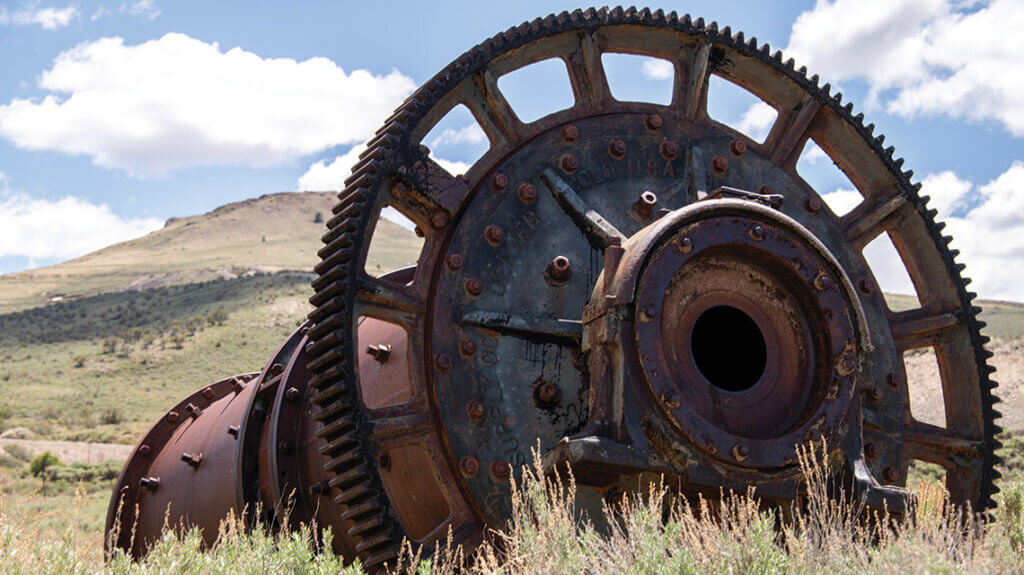
In addition to its scattered structures, Hamilton has a large collection of antique mining equipment. You’ll find these relics stacked in a neat row along main street—a bit like an outdoor museum. It’s a wonder to think these hulking cast-iron works were carried up the mountain by mule teams.
Despite this, Hamilton is still one of the best ghost towns in eastern Nevada and absolutely worth the visit. You’ll find a dozen structures scattered across the sagebrush, including an oddly anachronistic industrial shop in the middle of town, which was the headquarters for a short-lived mining revival in the 1980s. But now it too is a ghost and just as much a resident as the crumbling ruins of the old hotel across the street.
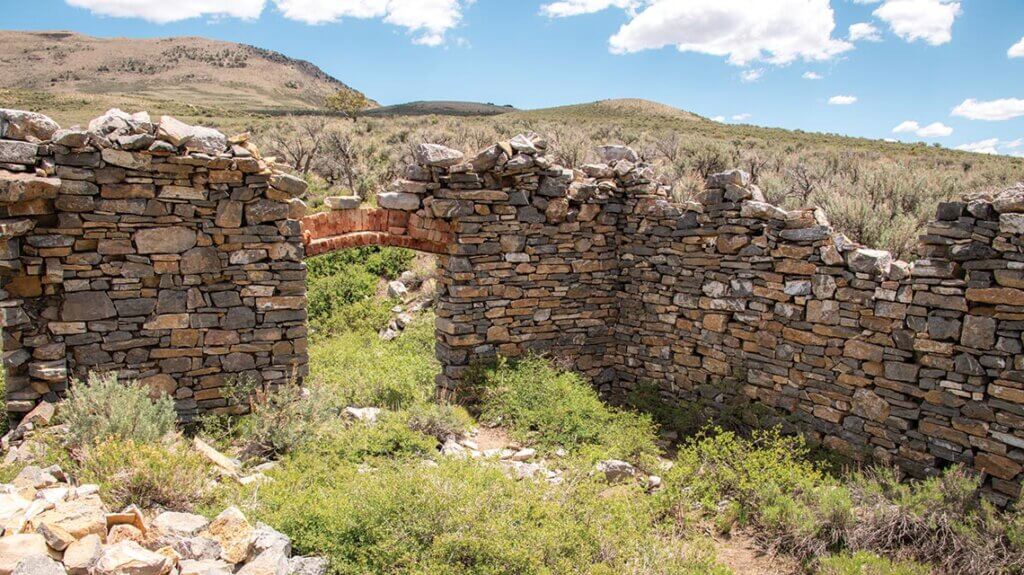
Finally, one of Hamilton’s best features is that it sits at the center of what was once a large, sophisticated mining district, and many historical sites in the surrounding hills await discovery. However, do keep in mind these other locations—including nearby Belmont Mill—are harder to reach and require more planning and an OHV (or a sturdy pair of hiking boots). Still, given the setting and the area’s history, your preparation will be rewarded.
The White Pine Mining District
In January 1868, miners discovered rich veins of silver ore in the White Pine Range. The rush to this new strike was immediate and impressive, and within a year, three bustling towns formed the heart of the White Pine mining district: Shermantown, Treasure City, and Hamilton. Each town was incorporated by the state legislature and boasted substantial commercial and public services. Additionally, each had their own special job in the district: Shermantown was the milling town, Treasure City focused on money and commerce, and Hamilton handled logistics and supply.
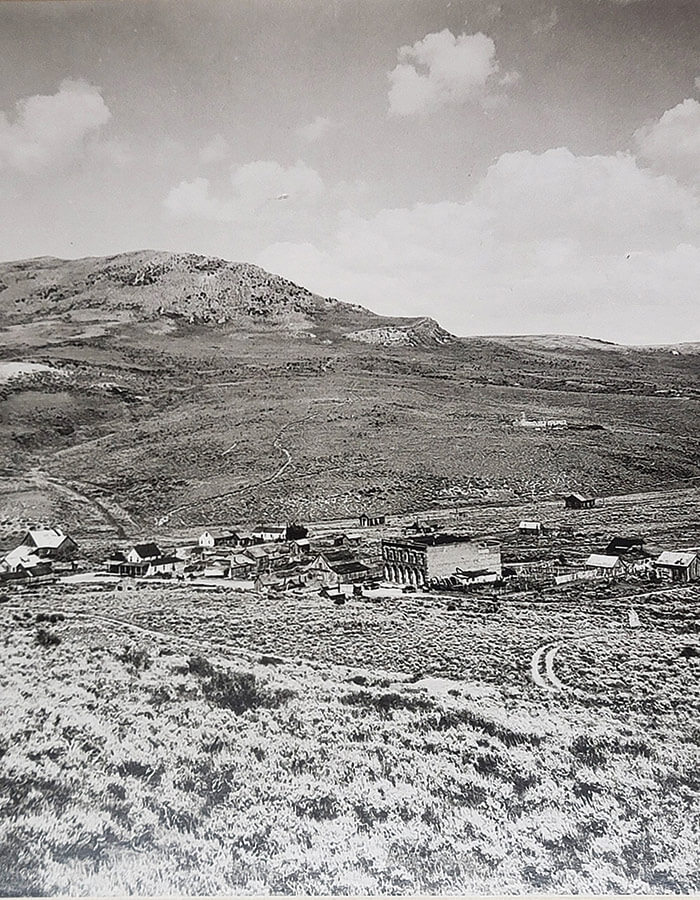
At around 8,000 feet, most of the mining district sprawled across a zone of harsh climate, particularly Treasure City, which was famous for its miserable, arctic weather. But despite the snow, wind, and isolation, all three towns thrived—for a time. In 1869, the district reached its peak with a population of about 20,000 people. Half of those residents lived in Hamilton, which made it the county seat when White Pine County was created on March 2 of that year.
Hamilton was a modern metropolis that boasted theatres, stores, dance halls, stage line companies, auction houses, a soda factory, and several breweries. A water company and steam-pumping works was even established by a San Francisco firm that anticipated Hamilton’s population would grow to 50,000.
But by 1873, production slowed, leaving only the poorer ores and base metals to prolong the area’s economic life. In 1885, a big fire wiped out most of Hamilton, including the brick courthouse and jail. Two years later, the county seat was moved to Ely. A small population survived through the 1920s. After the Hamilton post office closed during the Great Depression, the era of the great White Pine mining district finally came to an end.