Walking Through Worlds
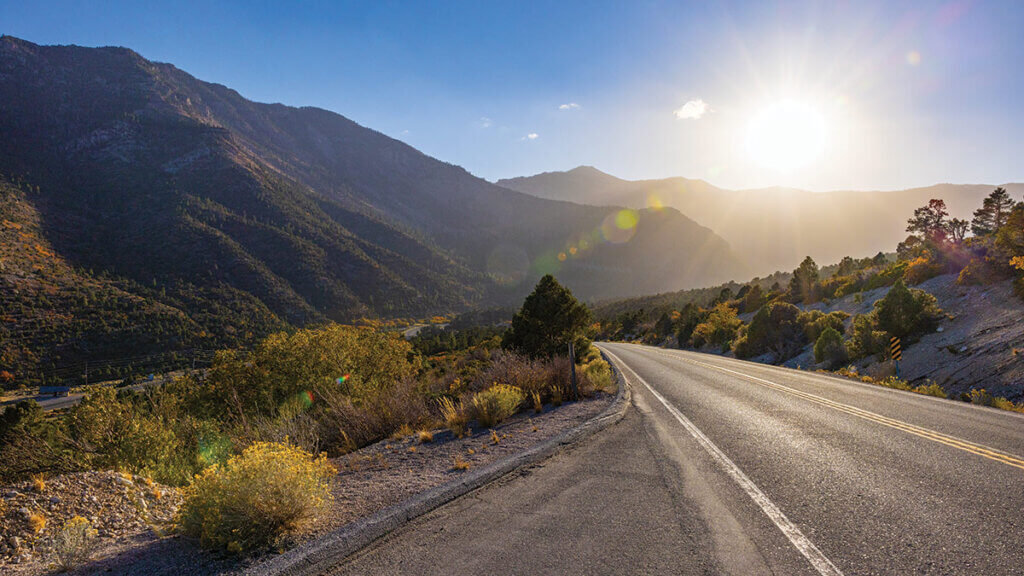
The drive from Las Vegas to the Spring Mountains is nothing short of breathtaking—and for those seeking to escape the summer heat, watching the temperature drop feels like a weight off your chest. During the 90-minute trip, you’ll climb past desert creosote, scraggly Joshua trees, and scruffy pinyon pine and juniper before arriving at towering ponderosa and gnarled bristlecone. If you take the entire scenic route, you can drive from 3,000 feet to more than 11,000.
And in a car, it’s over in a blink. If you want to slow down and experience part of the habitat transition, the Acastus Trail is a great choice. This gentle path in Kyle Canyon offers plentiful chances to get up close to the fascinating organisms of the high desert.
At A Glance
The Acastus Trail is a paved 1.5-mile out-and-back hike that can begin either near the Spring Mountains Visitor Center Gateway (connecting through the Kunav Huveep Trail) or from the Fletcher View Trailhead parking lot, accessed through the Kyle Canyon Picnic Area. Its elevation ranges from 6,700-6,900 feet.
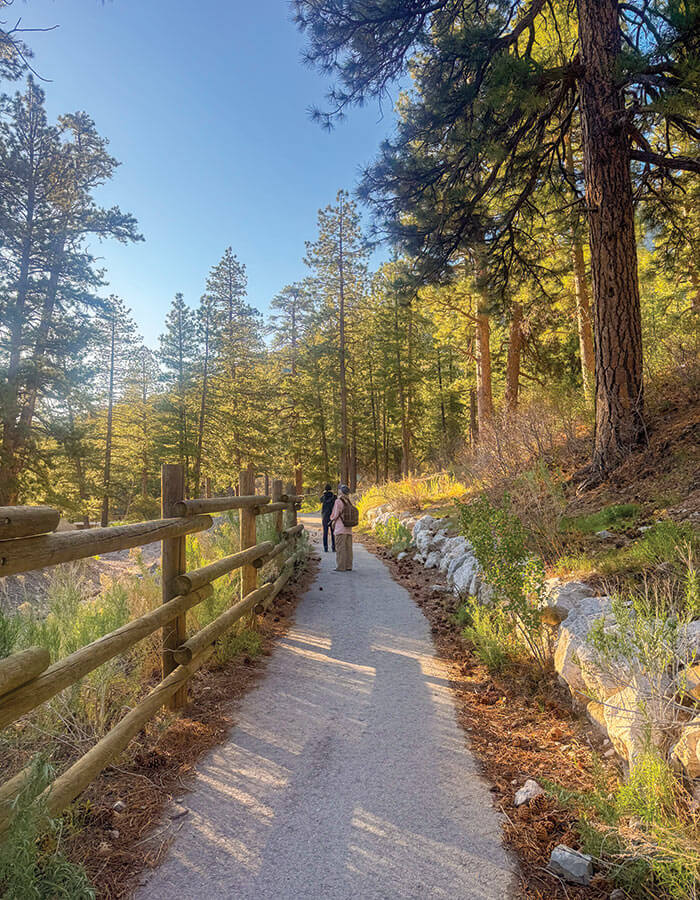
The trail runs along the Kyle Wash and features interpretive signage about the landscape’s geology, ecology, and history. There are shady spots closer to Fletcher View, and benches along the entire path make this an excellent choice for those with limited mobility, families with young children, or people who want to take a slower pace. Restrooms and water stations can be found at both the visitor center and picnic area.
Pinyon-Juniper Woodland
Starting the Acastus Trail at the visitor center will put you in the heart of the pinyon-juniper woodland, a habitat characterized by single-leaf pinyon pine and Utah juniper and shrubs like Gambel oak, curl-leaf mountain mahogany, and sagebrush. What these plants have in common is that they’re typically short and brushy, due in large part to harsh environmental conditions like infrequent rainfall and rocky, nutrient-poor soils.
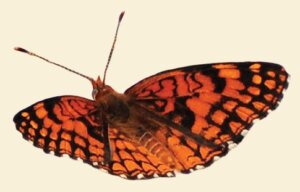 This scrubby world is home to this trail’s namesake: the Spring Mountains acastus checkerspot butterfly, one of many butterfly species that call this region home. This orange and black, checkered-patterned butterfly is an endemic species, meaning it is found nowhere else in the world, and although it is rare, it’s possible to find it fluttering around the trail in the warmer months.
This butterfly is one of 20 endemic animals and plants that reside in the Spring Mountains, a phenomenon that has occurred because of the unique geography of this landscape.
As you walk and take in the sweeping views of Kyle Canyon, think about how these mountains are surrounded by desert on all sides. Over evolutionary time, the common ancestors of the acastus checkerspot became genetically isolated from one another, unable to cross the lowland Mojave Desert and spread their genes. The result? Another distinct, isolated species joins the Spring Mountains’ rich biodiversity of endemic plants and animals.

Like all butterflies, the acastus checkerspot needs a host plant to support its development. As caterpillars, they eat yellow and rubber rabbitbrush: two species of bushy shrub that produce small, yellow flowers in the late summer and early fall—both of which grow along the entire Acastus Trail. As adult butterflies, they seek nectar from a plant called spreading dogbane, an uncommon, low-growing shrub with white, bell-shaped flowers.
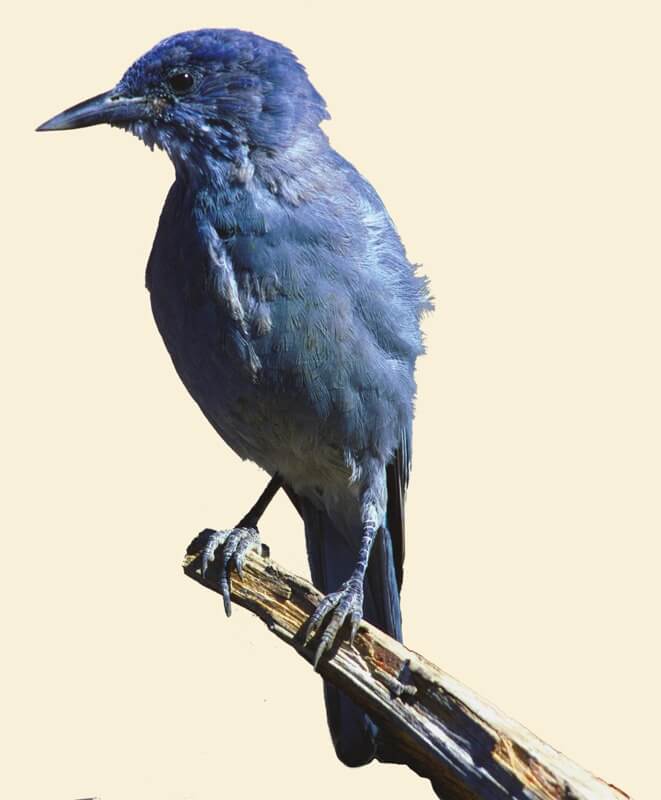
The pinyon-juniper habitat is home to another elusive animal: the pinyon jay. A relative of the common ravens and scrub jays that call the Spring Mountains home, these cerulean birds are nomads, traveling in family flocks across the woodlands of southern Nevada and other Western states, nesting in pinyon pines and searching for their seeds. In the fall, they can cache up to 30,000 seeds for winter, making them crucial dispersers for the trees—whose heavy seeds cannot be spread by wind or water. Because of their broad ranges, these jays can be enigmatic and difficult to spot, but woodlands like those on the Acastus Trail provide an important habitat for them.
Ponderosa Pine Forest
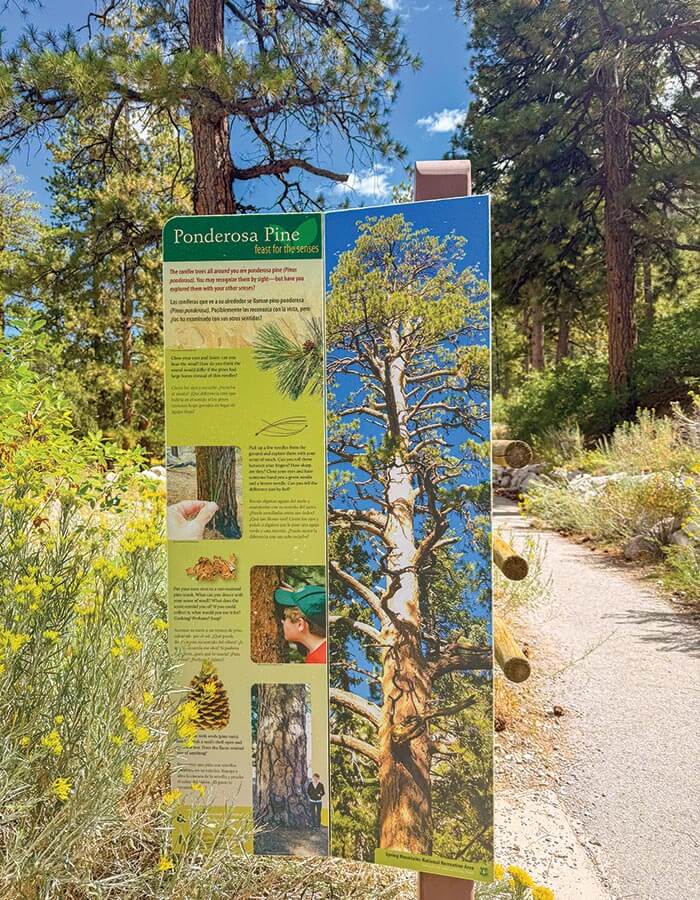
As you make your way up the trail, you will soon enter the greener, cooler canopy of ponderosa pines and white firs. The warm red hues of the ponderosa trunks and the supple shade of their branches invite you to take a deep breath of the mountain air. Perhaps you will cross paths with wary mule deer, which make their way up and down these habitat zones as they search for shrubs and grasses to eat.
In the spring and early summer, the trees host a rich soundscape of birdsong as different species establish breeding territories in the shelter of the forest. Keep an ear out for the melodical songs of western bluebirds, robins, warbling vireos, western tanagers, house finches, and many more—not to mention the nasally sounds of red-breasted nuthatches and northern flickers, whose calls and songs punctuate the landscape.
The forest attracts such a myriad of birds due to the abundance of insects, water, and nesting shelter compared to the desert lowlands. This makes spring a season of frantic energy as birds establish territories, find mates, lay eggs, and raise young. Though they may be hard to spot in the tall trees, they are abundant.

The ponderosa’s needles also help the pine avoid fire. As they fall, the abundant needles create a thick blanket that protects the tree from competing grasses and other plants, reducing the fuel load that could potentially ignite and spread. This strategy explains the scattered, open canopy you’ll find while wandering through these forests.
A Memorable Hike
The Acastus Trail is a special place to experience how subtle changes in geography can dramatically affect biodiversity. This short walk offers an intimate look at the relationships between plants, animals, and climate in southern Nevada. And even though it’s so close to a bustling city, it still provides a rewarding sensory experience like you’re a world away.
Little Helpers
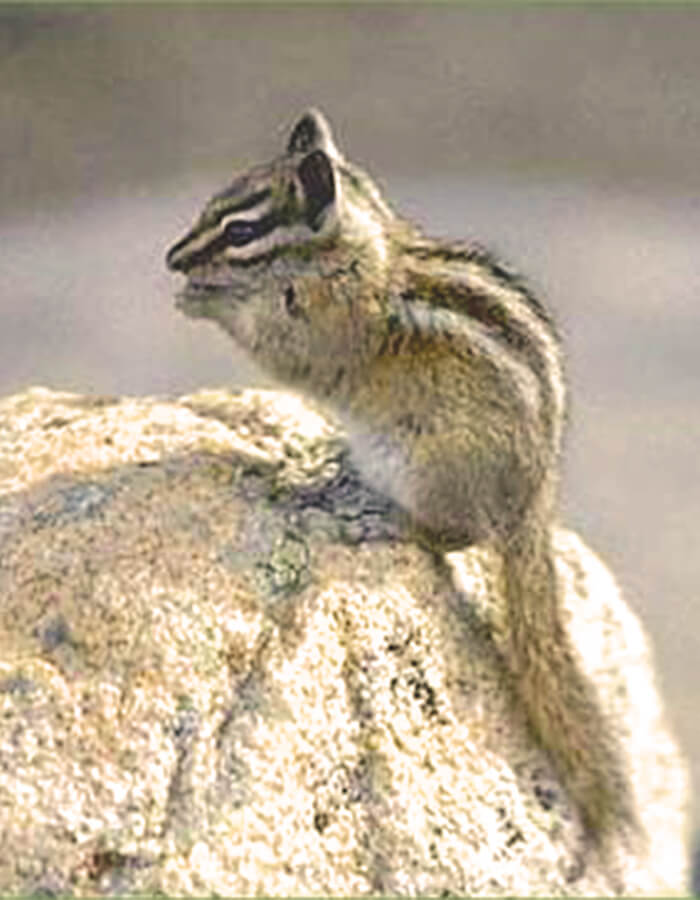
The Palmer’s chipmunk is another endemic species of the Spring Mountains. These small, reddish-brown rodents are onnly about 8 inches long and have alternating black and white stripes on their face and back. The serve an important role in the forest as seed dispersers: When they drag ponderosa cones away to eat, they spread the seeds far away from the parent tree.