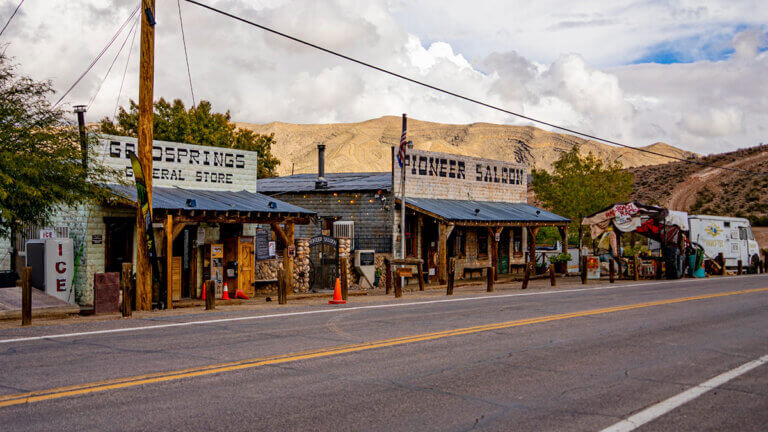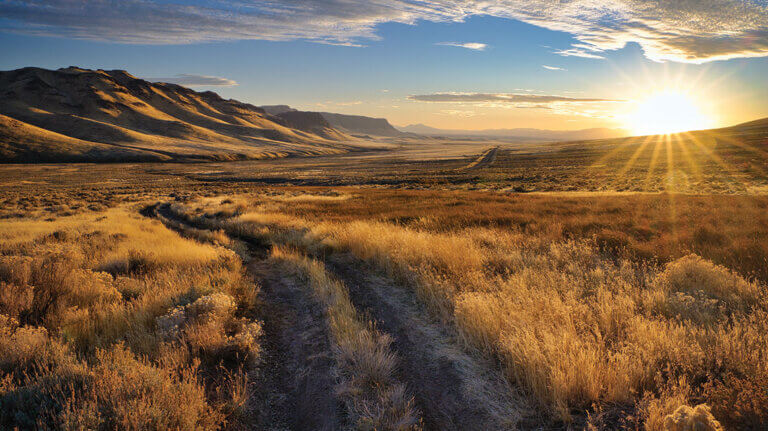
For this issue of Nevada Magazine & Visitor Guide, we’re excited to present (in no particular order) our staff’s favorite ghost towns. This list was assembled from our very own ghost town travels, and we’d recommend each one to any traveler seeking an immersive experience. Without further ado, let’s get a little out there and meet the best of the Silver State.
Berlin-Ichthyosaur State Park
Austin
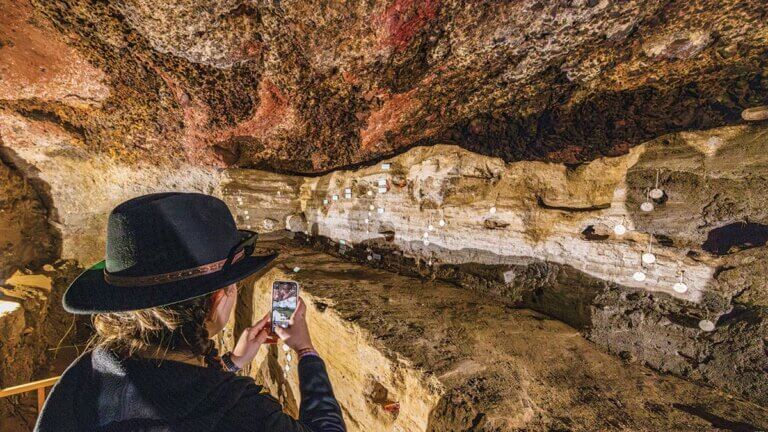
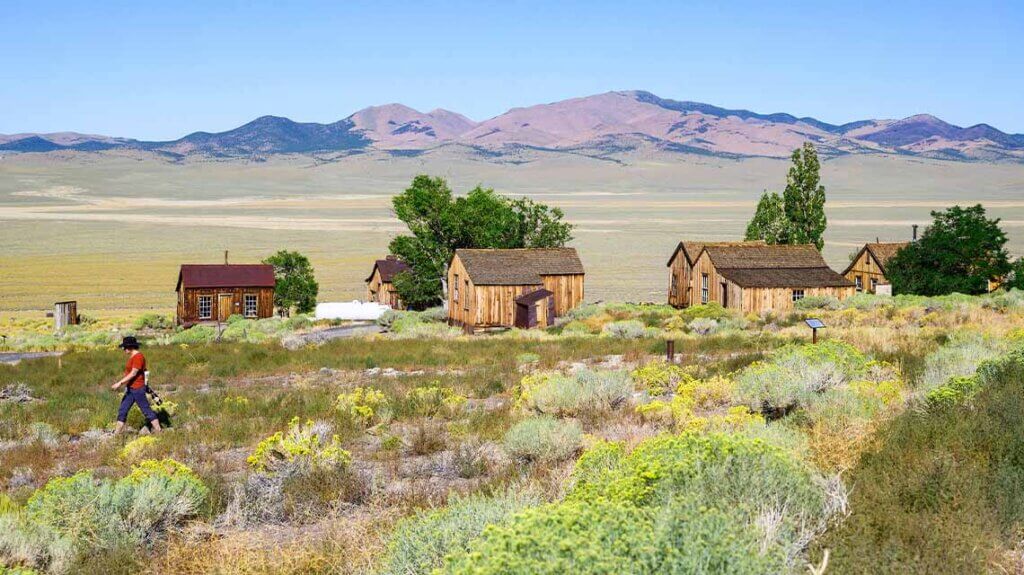
Thanks to its remote setting and state-park status, Berlin stands as one of the region’s best preserved and most visited ghost towns. Visitors have plenty to explore, including its iconic mill and dozens of weathered buildings like residences and a blacksmith shop. As if this weren’t enough, this park is also home to one of the largest collections of ichthyosaur fossils on the planet, which are showcased at the fossil house—located a few miles down the road.
Candelaria
Hawthorne/Tonopah
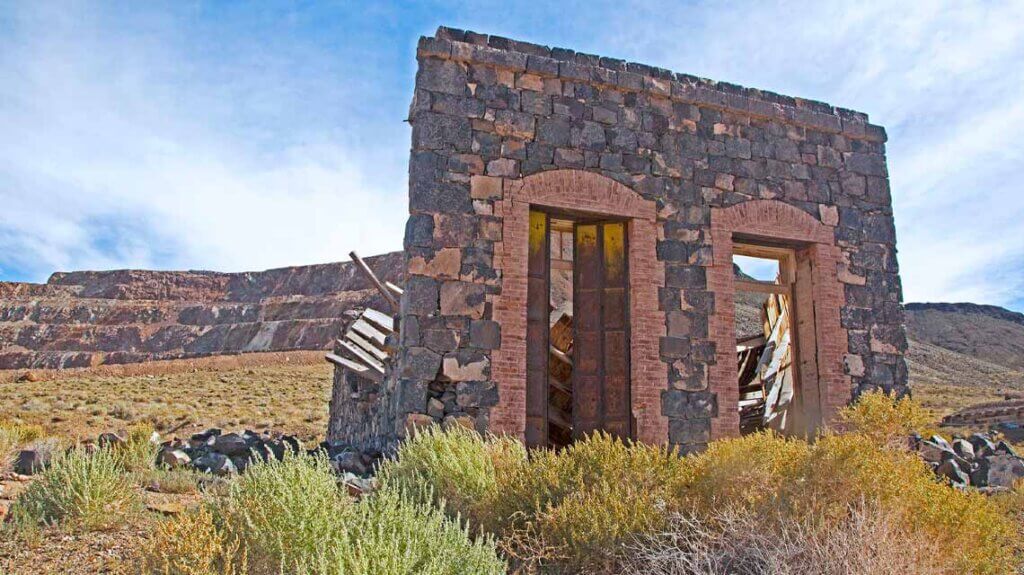
Silver mining began in Candelaria in 1873, and by 1880, it was the largest community in Mineral County with 1,500 residents. During peak years, its busy downtown included a bank, a newspaper, luxury hotels, and a telegraph office. Candelaria might be one of the most spread-out sites on this list, and it’s easy to spend a day in the surrounding landscape while wandering the remains of cabins, dig sites, and crumbled ruins.
Delamar
Caliente
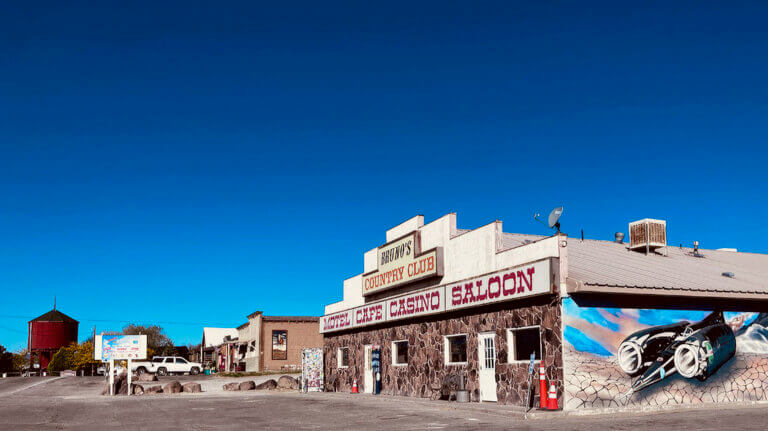
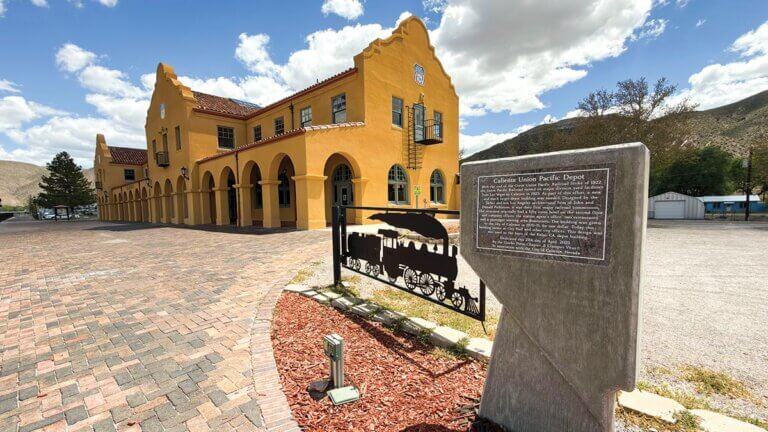
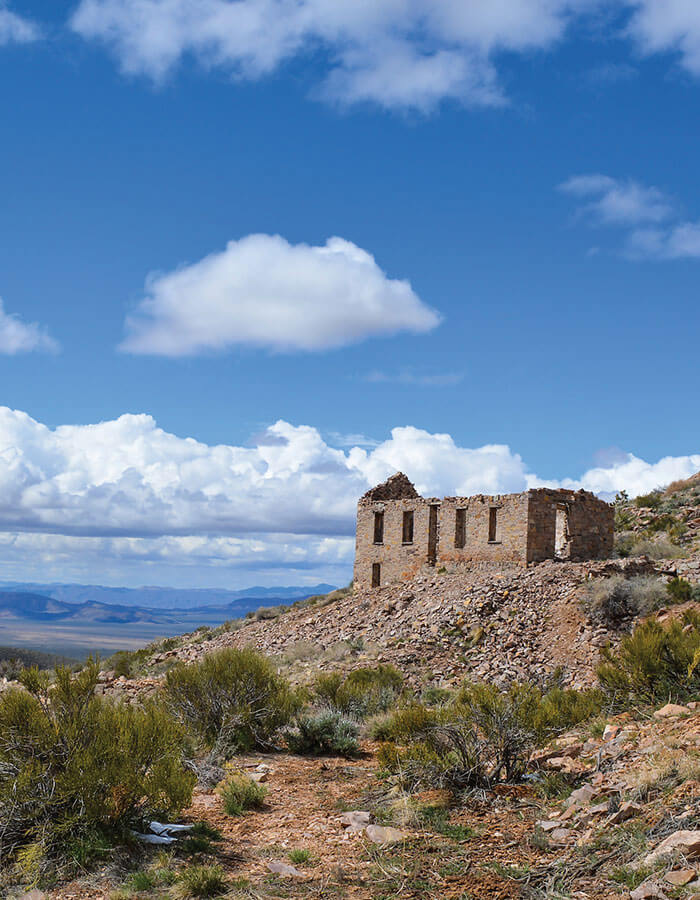
Located in Lincoln County near Caliente, Delamar is one of the state’s largest (and hardest to reach) ghost towns: You’ll definitely need a good pair of hiking boots or an OHV. Delamar was an incredibly profitable gold mining town that thrived for around a decade, peaking at around 3,000 people in 1897. The town was infamous for its high fatality rate due to silicosis, which workers developed after breathing in fine particulate—colloquially called Delamar Dust—that came off the dry stamp mills. Today, you’ll find countless mine and mill ruins, hundreds of foundations, and many structures only missing a wall or two.
Hamilton
Ely
One of the largest ghost towns in eastern Nevada, remote Hamilton sits at the center of what was once a large, sophisticated mining district. In the town proper, visitors will find scattered homesteads, ruins, and massive mining equipment, but it’s the surrounding hills that hold the true discoveries. Keep in mind these other locations—including nearby Belmont Mill—are harder to reach and require more planning and an OHV.

Marietta
Hawthorne/Tonopah
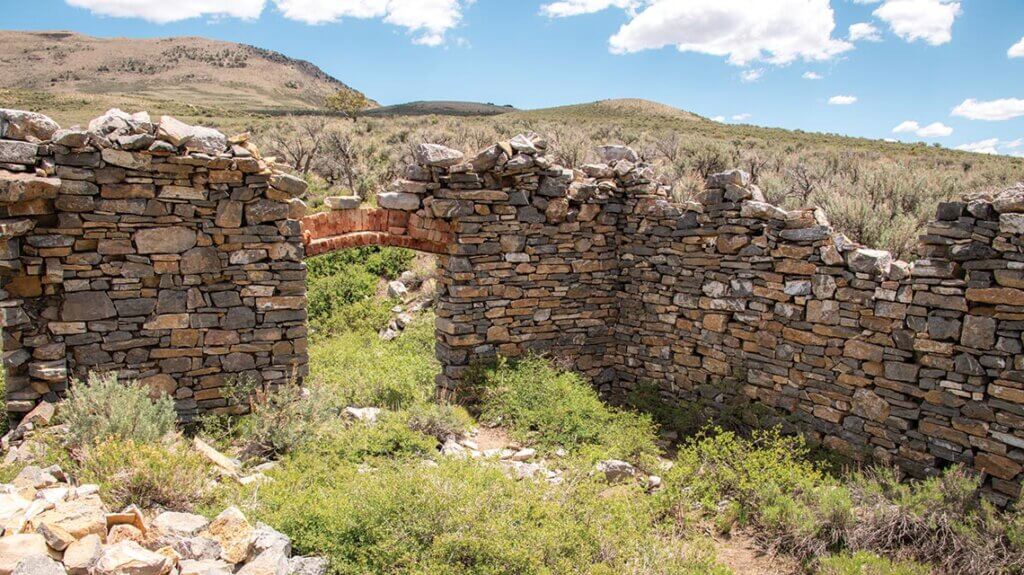
The remains of Marietta are scattered along an alkaline valley below Boundary Peak—Nevada’s tallest mountain. Founded in the late 1870s, this community mined borax, a specialized salt that was used in cleaning, medicine, ceramics, and metallurgy. Marietta declined in the 1890s after borax deposits were found near Death Valley. Today, visitors find standing commercial structures of impressive rockwork still in good condition, a cemetery, and a half dozen foundations.
Metropolis
Elko
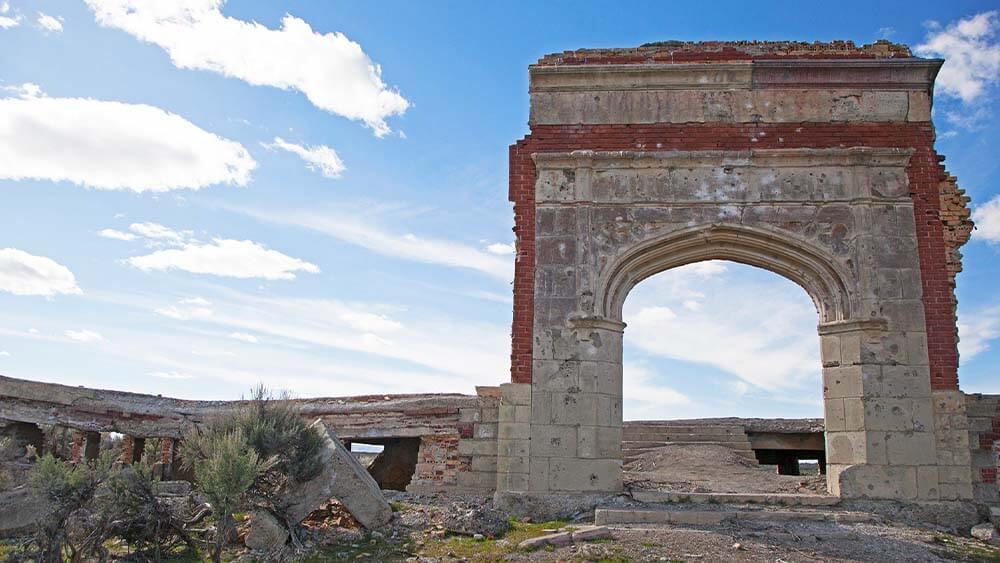
This ill-fated town began as a planned farm community but ultimately met disaster after disaster including drought, fire, disease, and even a cricket infestation. Today, all that’s left of Metropolis are fragments of its grand ambitions and dozens of crumbling foundations. At just one hour from Elko, this ghost town is an easily accessible destination for families. Upon arrival, you’ll spot the ruins of the Metropolis Hotel and the schoolhouse’s conspicuous archway. Further west are the scattered remains of homesteads and a still-maintained town cemetery.
Rhyolite
Beatty
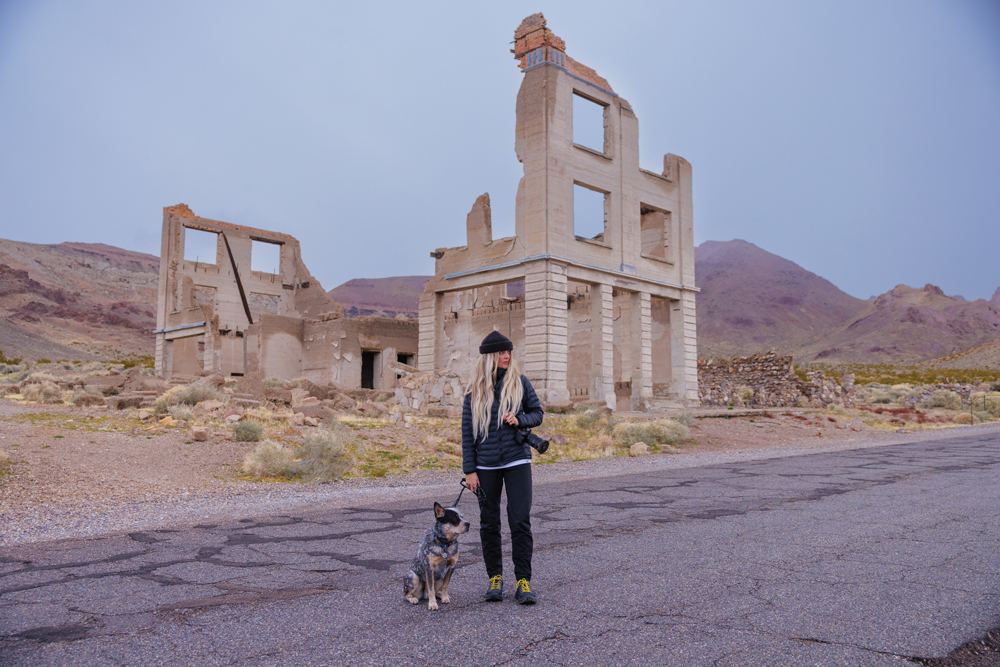
Located just outside Death Valley National Park, Rhyolite might be one of the most famous ghost towns in the West—it’s certainly the most photographed. Once a booming gold camp, Rhyolite grew fast and flamed out even faster. What remains are its iconic ruins including a crumbling bank, striking train depot, and the famous Tom Kelly Bottle House.
Seven Troughs/Tunnel Camp
Lovelock
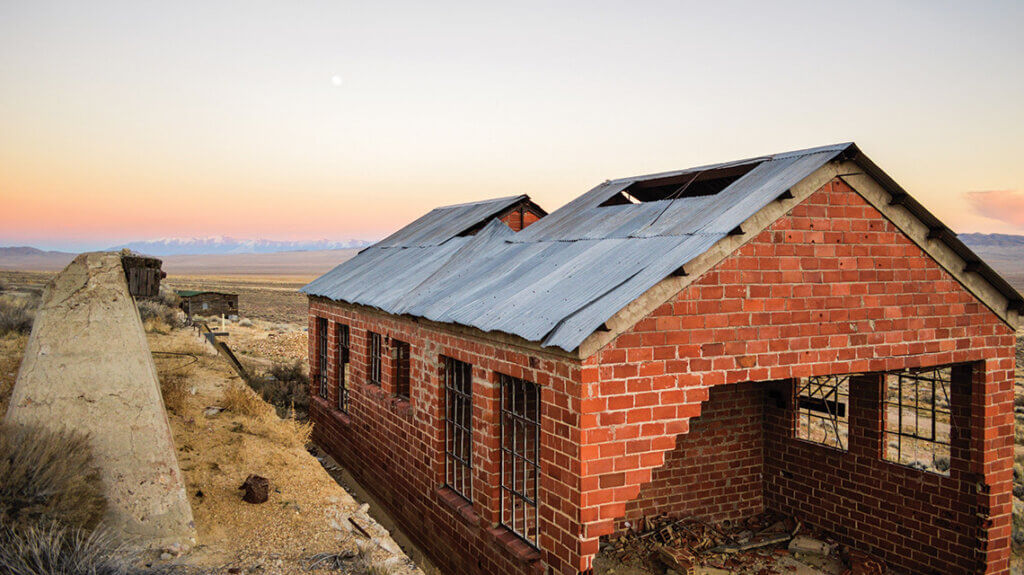
After gold was discovered in 1906, the remote canyon town of Seven Troughs sprang to life with saloons, hotels, and a few hundred hopeful residents. While you’ll find traces of weathered wood and rusted ruins there today, it’s not the end of the story. In the late 1920s, a company in Seven Troughs constructed a work site—called Tunnel Camp—on the valley flats south of the town. Several impressive structures still stand, including a large red brick building, a stamp mill, wooden cabins, and tailings.
Sprucemont
Elko
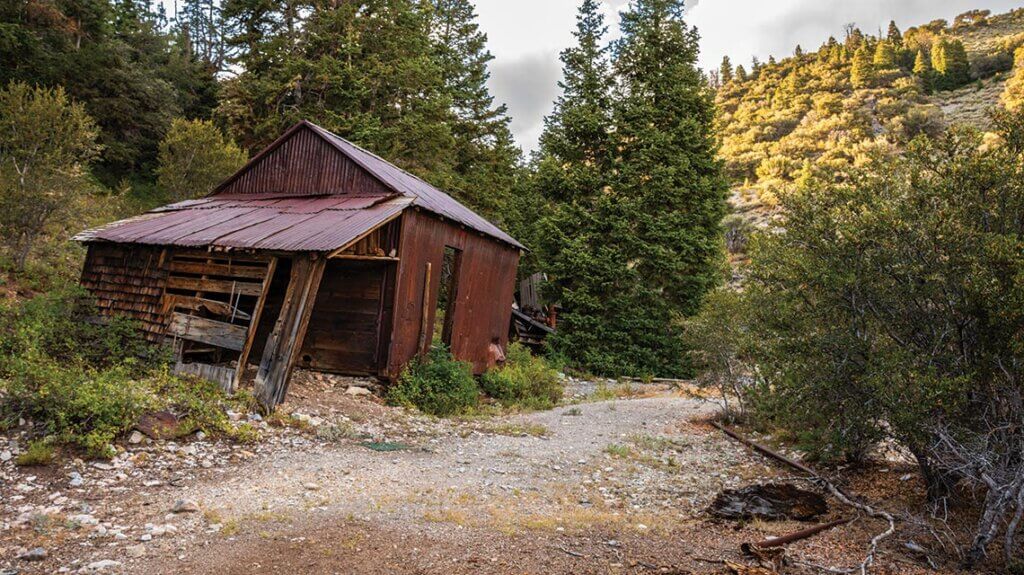
Sprucemont is but one of a handful of towns that arose up in the piney hills near the Ruby Mountain’s eastern slope. Between 1869 and 1930, the area saw a series of booms, lean years, and brief revivals. Half a dozen mines were dug out over 4 miles, and hundreds of residents built their log cabins and businesses in what was known as the Sprucemont District. Thanks to its remote location and relatively recent abandonment after World War II, Sprucemont is still in remarkable condition. Dozens of structures dot the landscape, and the remains of a half dozen mines can be found throughout the foothills. Access to the site is difficult and should only be attempted with a high-clearance vehicle.
St. Thomas
Overton
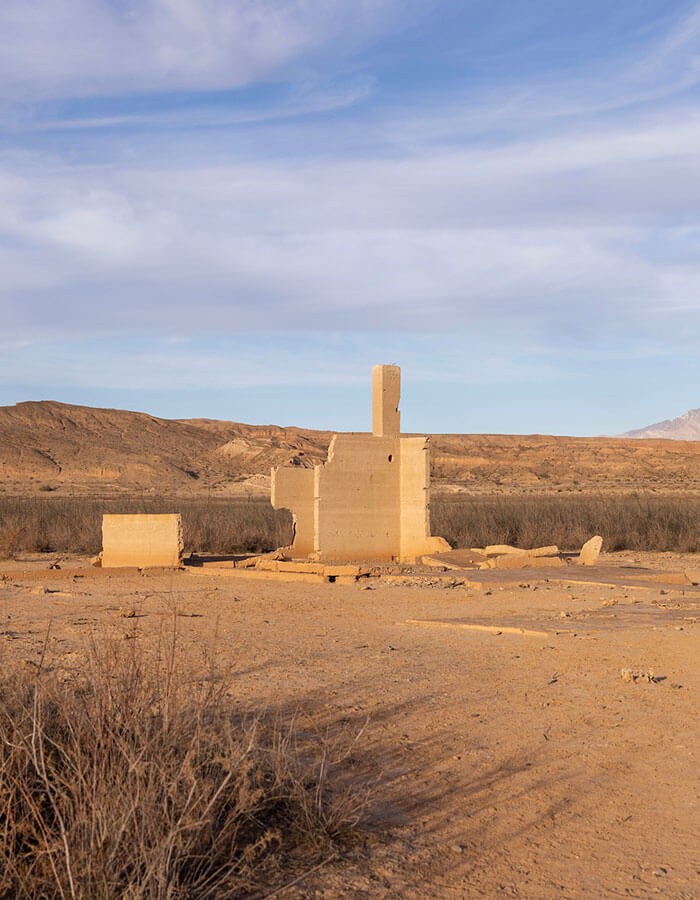
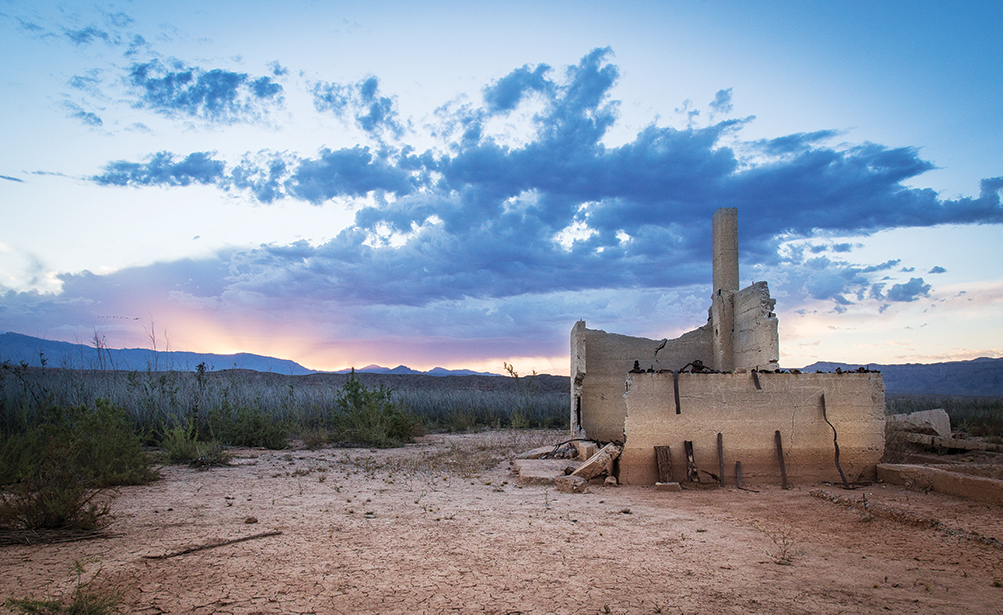
This settlement dates to the 1860s, when Mormon farmers settled the verdant desert valley. After Hoover Dam was completed in the 1930s, St. Thomas slowly flooded until it was 60 feet below newly formed Lake Mead. For decades, the little town slumbered beneath turquoise waters. Today, the reservoir has dropped below the ghost town, making it a must-visit while enjoying Lake Mead National Recreation Area. Take the 2.5-mile loop trail to marvel at the dozens of crumbling concrete foundations and enjoy signage that interprets the community’s history—and eventual demise.